





For decades, congenital measles was so rare in the United States that many healthcare professionals had never encountered a case. That is changing. A preliminary analysis published on November 16, 2026, in NEJM Evidence documented 112 cases of measles among pregnant women and 13 cases of congenital measles in newborns between January 2025 and September 2026. The findings, reported across 16 U.S. jurisdictions, included maternal pneumonia, premature births, and newborns requiring intensive care. For a country that has possessed an effective measles vaccine for more than six decades, the reappearance of this once exceptionally rare condition raises serious questions about the protection we provide to mothers and their children.
Congenital measles occurs when a baby acquires measles infection associated with maternal infection during pregnancy, with evidence of infection appearing at or shortly after birth. Unlike infants who contract measles through exposure after delivery, these babies may enter the world already infected, before having any opportunity to benefit from routine childhood vaccination. Although congenital measles remains rare, its consequences can be severe, particularly because newborns have immature immune systems and limited physiological reserves to withstand serious infection. The American Academy of Pediatrics warns that affected infants can experience pneumonia, neurological complications, and potentially life-threatening illness. Some complications may become apparent months or years after the initial infection.
What the surveillance report found
Of the 112 pregnant women with confirmed measles, 26 required hospitalization for reasons unrelated to labor, and 11 developed pneumonia. At the time of the report, investigators had pregnancy outcomes for 37 of the 112 women. Among 19 live births occurring within 14 days of the mother's measles rash appearing, eight were premature and eight infants required admission to neonatal intensive care. Two additional pregnancies in that same period ended in loss.
Although these preliminary surveillance data cannot establish that measles caused every adverse outcome, they demonstrate the serious complications observed among affected mothers and their infants. Of the 16 newborns reported to have been tested, 13 met the study’s definition of congenital measles. Six of those infants developed symptoms, including one with findings compatible with inflammation involving the brain and its surrounding membranes.
“For decades, congenital measles was so rare in the United States that many healthcare professionals had never encountered a case. That is changing.”
These developments are occurring against a broader deterioration in measles control. On November 17, 2026, the Pan American Health Organization announced that the United States had lost its measles elimination status after 26 years because sustained transmission had resumed. By November 12, the Centers for Disease Control and Prevention had recorded 5,412 confirmed measles cases in 2026. These figures have implications beyond the growing number of infections. As measles circulates more widely, it increasingly reaches populations whose vulnerability makes vaccination decisions a matter of collective responsibility, including pregnant women, newborns, and people with compromised immune systems.
Before a baby can be vaccinated
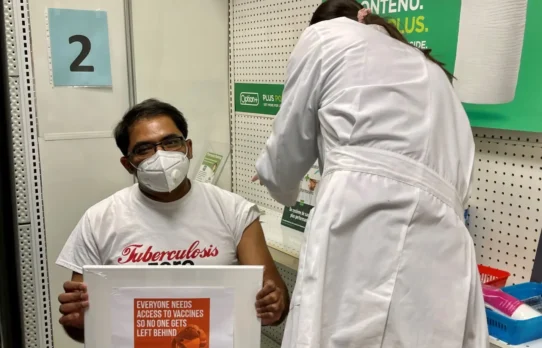
The measles, mumps, and rubella (MMR) vaccine is not recommended during pregnancy. Protection during pregnancy therefore depends on vaccination before conception and on immunity in the surrounding community. According to the CDC, two doses of MMR vaccine are approximately 97% effective at preventing measles. Of the 112 pregnant women in the surveillance report, 110, or 98%, had either received no documented MMR doses before pregnancy or had an unknown vaccination status. This finding reinforces the importance of ensuring that women enter pregnancy with documented protection against vaccine-preventable infections.
The vulnerability continues after birth. Under the routine U.S. childhood immunization schedule, infants receive their first MMR dose between 12 and 15 months of age, although an earlier dose may be recommended from six months for infants at increased risk during outbreaks or international travel. This creates an important period during which infants depend heavily on maternal antibodies and the immunity of people around them. Research has shown that maternally acquired measles antibodies decline during early infancy, sometimes leaving children susceptible well before their first scheduled vaccination. A 2025 multicountry study published in the Journal of Infection concluded that relying on maternal antibodies until nine months of age could leave most infants inadequately protected during the period between six and nine months. As community vaccination coverage declines, this vulnerability becomes increasingly consequential.
The principle underlying community protection is particularly relevant here. When sufficiently high proportions of a population are immune, opportunities for transmission diminish, indirectly protecting individuals who cannot be vaccinated. Measles is among the most contagious infectious diseases. The Pan American Health Organization calls for at least 95% coverage with two doses in every community to help prevent sustained transmission. However, CDC school vaccination data show that MMR coverage among U.S. kindergartners declined from 95.2% in 2019–2020 to 92.4% in 2025–2026. These national figures also conceal communities where coverage is substantially lower. When immunity gaps accumulate, the consequences extend beyond those who remain unvaccinated to individuals whose age or medical circumstances prevent them from receiving protection directly.
“Protecting newborns begins long before birth, through the health systems, vaccination programs, and collective decisions that safeguard the communities into which they are born.”
As public health professionals whose experiences span health systems in developing and high-income settings, we find the implications for maternal and child health especially concerning. Across many parts of the world, substantial resources are invested in ensuring that women and children can access essential preventive healthcare, including vaccination, antenatal services, and newborn care. The underlying objective is to prevent avoidable illness, complications, and deaths before they occur. The emergence of congenital measles in a country with extensive immunization infrastructure illustrates how easily that objective can be undermined when preventive services, vaccine confidence, and community protection are not adequately sustained. It also reinforces an important lesson in health systems strengthening: the availability of effective medical technology does not guarantee equitable or sustained population-level protection.
Measles prevention belongs in maternal care
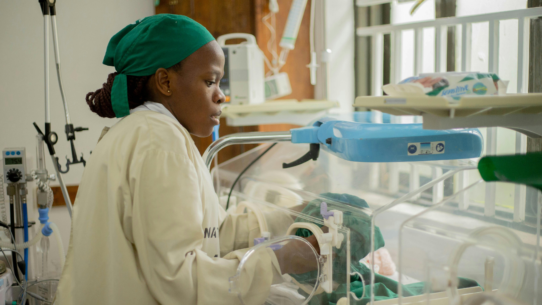
Healthcare professionals should routinely review measles immunity during preconception care and ensure that individuals who require MMR vaccination receive it before pregnancy. Women without immunity who are exposed during pregnancy need prompt assessment because intravenous immune globulin may provide protection when administered within six days of exposure. Maternity services, emergency departments, and neonatal intensive care units must also maintain protocols for identifying suspected measles, preventing healthcare-associated transmission, and managing exposed mothers and newborns. These interventions require coordinated communication between obstetric, pediatric, infectious disease, and public health services.
Vaccination access, reliable immunization records, community trust, and effective public health communication are institutional responsibilities. Parents deserve accurate information and opportunities to discuss concerns with healthcare professionals, while policymakers must ensure that prevention programs remain accessible, adequately financed, and responsive to communities experiencing vaccination gaps. Strengthening community-wide immunity is especially important because pregnant women and newborns cannot always protect themselves through vaccination, regardless of their willingness to do so.
The emergence of congenital measles should change how we understand the consequences of declining vaccination coverage. Those consequences are reaching maternity wards and neonatal intensive care units. The United States has the scientific knowledge and public health capacity to prevent congenital measles. Protecting newborns begins long before birth, through the health systems, vaccination programs, and collective decisions that safeguard the communities into which they are born.