




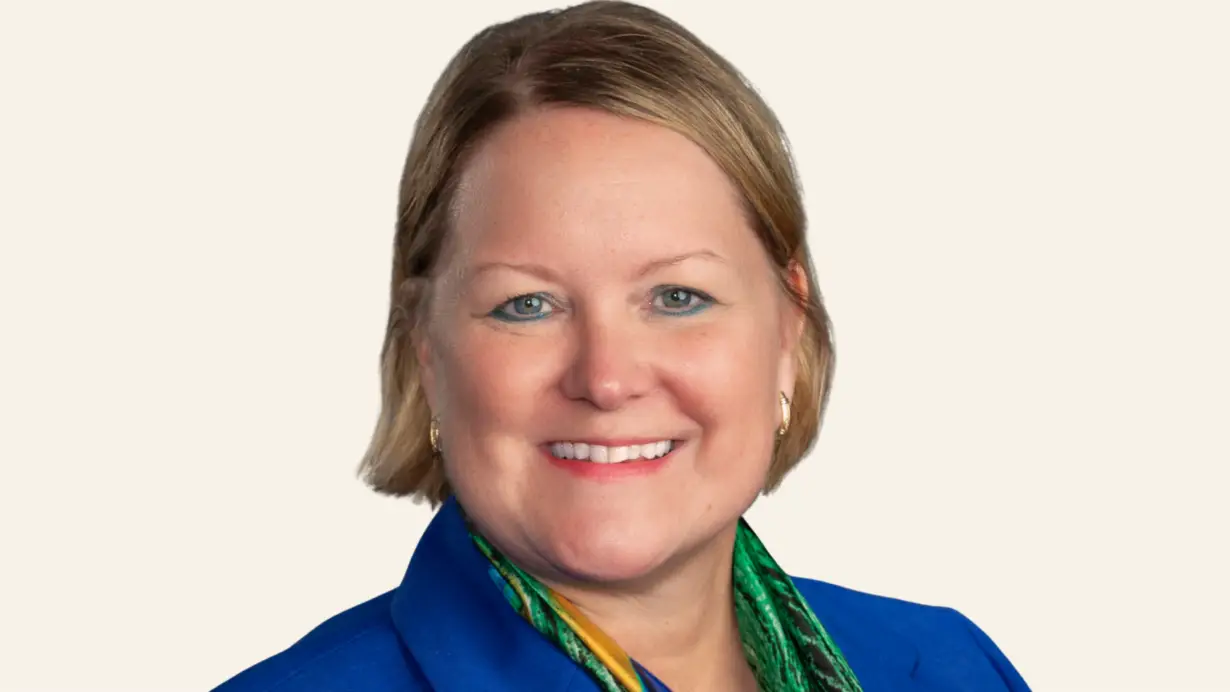
Monica Swahn draws on government science and research partnerships in Uganda to explain how she thinks about academic leadership and the work it should make possible.
Monica Swahn remembers asking colleagues to take her name off manuscripts she had helped write. Internal clearance at the Centers for Disease Control and Prevention was proving difficult, and she did not want her involvement to delay the team’s publications.
“You don’t want to hold the team back,” she says.
She recounts the experience with frustration. It also introduces a question that runs through our conversation on The Scholars Table: how does the institution you work in affect what you can contribute?
Swahn spent nearly a decade at the CDC before moving into academic public health. She became dean of the Virginia Commonwealth University School of Public Health in July 2025, following a deanship at Kennesaw State University. Her research has examined alcohol use, violence and mental health, including through longstanding partnerships in Uganda.
Her account of leadership is grounded in those different settings. As a researcher, she develops questions and studies. As a dean, she works on the arrangements that allow colleagues and students to pursue theirs. Those responsibilities call for a different understanding of professional achievement.
The freedoms and obligations of each setting
Swahn entered public health through an interest in psychiatry. While studying psychology at the University of Pittsburgh, she worked with a professor whose appointments included psychiatric epidemiology, the study of mental health conditions across populations. It offered a direction she had not previously considered.
She completed her bachelor’s degree, MPH and doctorate at Pittsburgh. Strong mentors and research opportunities helped her stay, alongside the practical considerations of family life and being part of a couple with two careers.
At the CDC, she found work she valued in violence and injury prevention, smoking and health, and the Office of the Chief Science Officer. She remembers the reach of a federal agency able to work with state and local health departments and help develop a national research agenda.
That reach came with obligations. Her research had to align with the agency’s priorities, and publications required internal approval. She recalls papers taking six months, sometimes a year, to clear for submission. These are descriptions of her experience at the agency, rather than a timetable for every CDC publication.
Academic research gave her greater freedom to develop an independent agenda and decide what to publish. It also required her to secure support for that agenda. A scientist might choose the question, but the work still depended on finding funders willing to pay for it.
Swahn’s advice to people considering these settings is to understand how the work is organised. The scope for independent inquiry, the resources available and the decisions requiring approval all affect daily practice. A job title reveals little of that.
Building expertise with partners
Her work in Uganda provides another way to think about professional contribution. Swahn had already worked in East Africa when she undertook a Fulbright fellowship connected with Makerere University. Her research biography places that fellowship between 2016 and 2018, supporting the development of an alcohol research centre.
She describes arranging the fellowship across repeated periods in Uganda, giving her time to develop collaborative work over several years. The centre formed part of a wider program involving surveys, community engagement and alcohol policy.
The aim she describes is for the expertise to become available within the communities and institutions doing the work. When that happens, she says, “my job is in essence done.”
It is a clear statement about how she judges her own role. A visiting researcher can contribute specialist methods and help establish projects. The longer purpose is to support colleagues who can carry that work forward and respond to the needs around them.
Swahn also wants learning to move in both directions. She sees lessons from Uganda that could inform work in the United States, alongside opportunities to introduce research methods that have been less widely used in the Ugandan settings where her team works.
One example is TOPOWA, a study examining the social drivers of mental health among young women living in informal settlements in Kampala. It brings together university researchers and the Uganda Youth Development Link, the community organisation leading implementation.
The project investigates whether an intervention combining vocational training with psychosocial support can improve mental health. Its methods include examining experiences and living conditions alongside measures of stress. The research question connects an immediate concern, psychological distress, with the economic and social circumstances in which people live.
In the interview, Swahn describes encouraging preliminary findings. The published baseline analysis documents mental health concerns and substance use before the intervention; it does not establish the intervention’s effectiveness. The distinction keeps the research promise separate from a completed claim about what works.
The practical work of a dean
At VCU, Swahn is leading a young school within a university that also has schools of medicine, nursing, dentistry, pharmacy and health professions. She sees those connections as opportunities for public health researchers and students to work with colleagues across clinical and other disciplines.
The school’s current statement of direction places collaboration across the health sciences campus within its plans for research and education. In our conversation, Swahn makes the organisational work behind that ambition explicit: establishing the school’s structure, developing its relationships and deciding how it contributes within the wider university.
She describes the dean’s role as a chance to influence academic training and mentor scientists. The contribution comes through other people’s work as well as her own.
For students, that can affect who supervises a project, which teams they can join and what resources support their research. Swahn encourages doctoral applicants to look across the university when considering potential mentors, rather than stop at the school of public health’s faculty list.
Funding is part of that environment. She describes VCU’s commitment to supporting students enrolled full time in its doctoral programs. The school’s published funding information says support depends on availability and student performance. Applicants should confirm the terms offered by their particular program, including the duration and obligations attached to support.
Choosing a place where you can contribute
When reviewing doctoral applications, Swahn looks for evidence that candidates understand research. Experience in a laboratory, collecting or analysing data, or contributing to a publication can help an applicant explain what they have learned and why they want to continue.
She also wants applicants to investigate potential supervisors and the work those supervisors do. A compelling application connects a person’s interests with expertise and opportunities the program can actually offer.
Her broader career advice follows the same logic. People can move between government, universities, industry and nonprofit organisations, bringing experience from one setting into another. She encourages early career professionals to develop writing and proposal skills that can serve them across those settings.
She gives equal attention to the people around them. A supervisor who makes time for questions, colleagues willing to collaborate and an environment that takes mentoring seriously can shape a person’s early working life.
That advice gives applicants and job seekers something useful to investigate. They can ask how supervision works, how projects are supported and what happens when a junior colleague needs help. Those answers make an institution’s stated commitment to training easier to assess.
Begin with the problem
Asked which public health skill deserves more attention, Swahn chooses translation: making research findings useful in practice. The knowledge a study produces needs a route into decisions and action.
She also identifies a habit from her CDC years that she continues to use in academic and board settings. Before discussing a solution, she asks: “What problem are we trying to solve?”
The question imposes a practical discipline. A research proposal needs to establish the problem it will investigate. A school needs to know what its structure will help students and faculty accomplish. A partnership needs to respond to a concern the people involved recognise.
Swahn remains committed to public health despite the pressures she describes. Her career gives that commitment a specific form: creating the circumstances in which evidence can be produced, people can learn and findings can be used. Leading a school means attending to those circumstances every day, including when the work belongs to someone else.
This feature is adapted from Banda Khalifa’s conversation with Monica Swahn on The Scholars Table, published on 14 September 2026. Watch the full conversation.
Banda Khalifa is a physician, epidemiologist and host of The Scholars Table.