







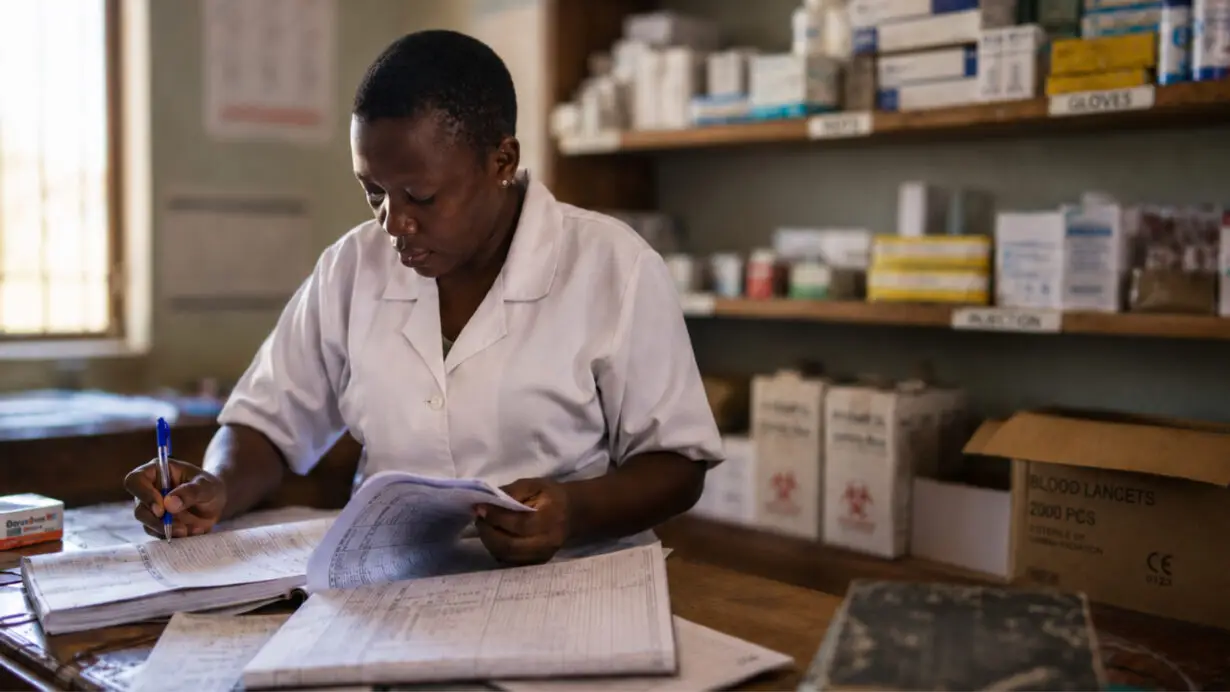
Last year in Sokoto, Nigeria, a suspension of donor funding exposed a troubling reality: within six months, 80% of local health facilities ran completely out of first-line malaria treatments.
During that same period, a state-led primary health reform program in Sokoto was upgrading birthing infrastructure, improving uptake of family planning services, and increasing routine vaccinations, largely through better data and governance mechanisms that helped target existing resources more effectively.
This contrast cuts to the heart of the global malaria crisis. Progress has stalled as proven solutions fail to consistently reach the people who need them most. The issue is not that we lack effective interventions, but that these do not deliver when systems are weak.
This is not isolated to malaria. Across public health, programs struggle to coordinate delivery, use data effectively, and sustain execution, limiting the impact of existing tools and new innovations.
Fragmentation also plays a role. Malaria, polio, immunization, and maternal health teams often visit the same communities with different teams, schedules, and delivery models. The result is higher cost, duplicated effort, and missed opportunities to reach more people through integrated services.
Climate change, conflict, and drug resistance are amplifying these weaknesses, putting decades of hard-won progress at risk.
The lessons are already visible. Forty-seven countries have achieved WHO malaria-free status, including 14 since 2017. From China to Suriname, countries have succeeded when scientific progress has been matched by strong delivery systems that combine data, coordination, and consistent execution.
Bright spots from high-burden countries such as the Democratic Republic of the Congo, Mozambique, and Nigeria, which together account for more than 40% of global malaria cases and nearly half of all malaria deaths, also show what stronger delivery and integration can make possible.
Elimination countries show what success requires. Experience from high-burden settings shows what is possible. The challenge is bringing these insights together to make today’s tools work better and create the conditions for tomorrow’s innovations to succeed.
Nigeria’s case for integrated health platforms
Historically, much of Nigeria’s malaria programming has relied on external support. While this helped ensure delivery, it also decoupled malaria control from routine government systems. With the suspension of the President’s Malaria Initiative, cracks in the supply chain and wider system delivery were laid bare – WHO monitoring found that within six months, 80% of facilities faced stockouts of ACT (the first-line drug for malaria treatment), while 59% lacked rapid diagnostic tests, limiting access to care.
In contrast, during the same period, Sokoto’s state-led reform platform continued to improve maternal health, family planning, and immunization services. Government and World Bank funding were integrated through an accountable delivery model, supported by real-time data. This gave local leaders the visibility and authority to respond quickly when problems emerged. While malaria stockouts persisted, these integrated systems continued to deliver results.
The takeaway from Sokoto is that government systems can respond rapidly when local leaders have ownership, visibility into last-mile performance, and mechanisms to act on the data. Stronger, more integrated primary healthcare platforms can help build these capabilities and make malaria delivery more resilient to future shocks.
Integrating support and funding in DRC
In the provinces of Haut Lomami, Haut Katanga, and Tanganyika in the DRC, three rounds of intensified outreach (PIRIs), supported by enhanced routine outreach, helped increase immunization coverage.
Routine immunization and polio investments were integrated into a single delivery model combining geospatial microplanning, integrated outreach delivery, digital vaccinator tracking, performance-linked payments, and demand generation, supported by daily data and weekly governance routines led by provincial EPI leadership.
This allowed teams to solve bottlenecks daily, adapt delivery during and between PIRI rounds, and target underserved communities more effectively. Over three seven-day rounds, more than 210,000 children were reached – including 40,000 zero-dose children – across 430 priority health areas.
Independent evaluation found measles coverage increased by 27 percentage points in intervention areas, while coverage declined sharply in control zones over the same period.
By innovating data, integrating delivery, and coordinating through a single governance framework, more children were reached in less time without duplicating effort or cost.
Mobilizing integration from the ground up in Mozambique
In Tete Province, local health leaders integrated delivery across multiple programs, building on systems established through GAVI immunization investments.
Rather than relying on top-down direction alone, provincial teams identified practical opportunities to coordinate delivery and achieve rapid gains.
They integrated other primary health services into proven immunization supervision, combined previously separate outreach visits for immunization, nutrition, family planning, and malaria, and used shared governance systems to coordinate delivery.
The strongest gains came through outreach. In just 10 days of integrated services, outreach teams reached 62% more communities than during the previous quarter.
Childhood vaccination increased by 81%. Vitamin A and deworming distribution increased by 277% and 287%, respectively. More than 25,000 women received maternal and newborn health outreach, up from 5,000 in the previous quarter.
Overall, more people were reached, in more places, in less time. This allowed teams to redirect resources toward other priorities without additional cost.
Mozambique’s Minister of Health, Ussene Isse, has since asked that this model become the norm across the country, with new national guidance codifying lessons from this locally driven approach.
Fragmentation raises costs, duplicates effort, and leaves missed opportunities in communities that need integrated services most.
Building the platform for future innovation
The lessons from Nigeria, DRC, and Mozambique are clear: progress is possible in high-burden settings. Stronger integration, accountability, and local ownership can turn existing resources into better outcomes today, while building the foundation on which future innovation depends.
We are the first generation in history with the tools to realistically end malaria. But even halving today’s burden will require major improvements in delivery. Eradication will require far more.
As malaria retreats into the more remote, marginalized, and underserved communities, reaching these last-mile populations will require more active surveillance and more precise intervention.
Encouragingly, global health initiatives are beginning to align investments and break down these silos, creating the conditions for stronger system performance.
This must now accelerate. New vaccines, AI-supported surveillance, next-generation vector control, and advanced diagnostics could reshape malaria control, but only if health systems can absorb and deploy them effectively.
The countries that benefit most from future breakthroughs will be those that strengthen delivery first. If a system cannot deliver a bed net today, it will struggle to absorb a new diagnostic, treatment, or vaccine tomorrow.
Jonny Barty is CEO of Acasus, where he leads large-scale reform efforts that support governments in low- and middle-income countries in improving health and education delivery. Since 2013, Acasus has partnered with 12 countries across Africa, Asia, and Latin America to strengthen immunization coverage, health systems, and access to care, including work on vaccine uptake in Afghanistan and last-mile service delivery in Mozambique.
Data Disclosure: Some figures and examples cited in this article draw on internal program monitoring, implementation data, and evaluation findings from health delivery and reform programs in Nigeria, the Democratic Republic of the Congo, and Mozambique. Where public sources are not yet available, the data reflect program records and analysis shared by implementing teams.







[…] the gap after the state directed service-ready facilities to provide daily sessions. Compliance rose from a slow start to 81 percent by June, and the number of children reached through routine immunisation nearly […]