




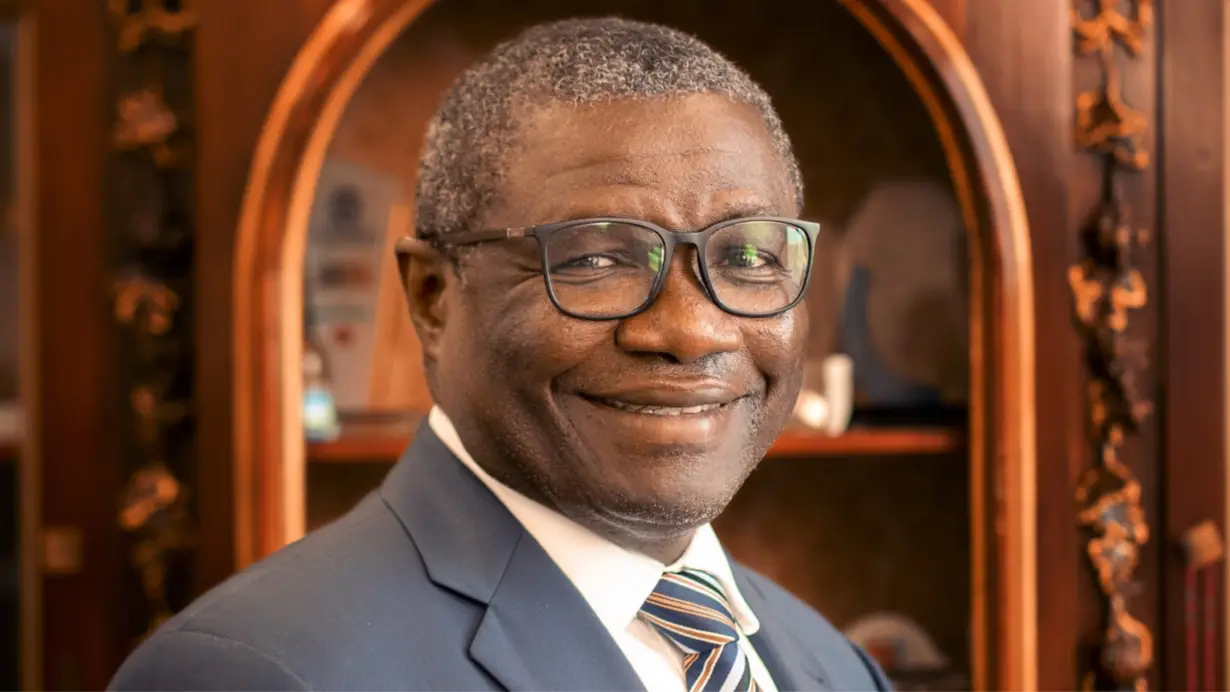
There is a kind of African success story the world is always ready to celebrate. It is the story of the exceptional individual: brilliant, resilient, globally recognized, and somehow still emerging from systems not designed to support that brilliance. It is an attractive story because it reassures everyone. Talent exists. Recognition follows. Progress, apparently, is being made.
Professor Christian Happi’s story unsettles that comfort
What makes his voice compelling is not the prestige attached to his name, though there is plenty of that. It is the fact that he speaks from a deeper impatience. He is not interested in proving that Africans can excel. That argument is exhausted. What interests him is something harder: whether Africa will build the scientific institutions, cultures, and conditions necessary to make excellence durable
The conversation begins where the best ones often do, not with status but with memory. He returns to childhood illness, severe malaria, and the lasting impression of vulnerability. It is not offered as sentiment. It is offered as explanation. Science, in this telling, began not as abstraction but as encounter: with pain, with helplessness, and with the unbearable normality of a disease that had already become routine in too many African lives.
That early confrontation seems to echo through the rest of his life. He chose biochemistry when others expected medicine. He walked away from a safer academic path when a more uncertain route seemed intellectually truer. The pattern is unmistakable. Again and again, he chose substance over prestige, difficulty over convention, and long-term relevance over short-term approval. These are the choices that often look foolish in real time. Only later do people rename them vision.
But the interview matters less as biography than as argument
Happi returns, with unusual clarity, to one of the central failures of African scientific life: the continent has too often remained a place where crises are observed, samples are exported, and meaning is produced elsewhere. This is not just a logistical problem. It is a problem of power. The issue is not simply delayed diagnosis or weak response. It is the deeper habit of dependency that turns African suffering into raw material for institutions outside Africa to interpret, validate, and solve.
This is why his language around genomics feels so urgent. He does not describe it as a narrow scientific specialty. He describes it as leverage. A way to move faster, know earlier, diagnose better, and create the foundations for vaccines, diagnostics, and therapeutic breakthroughs that are not permanently outsourced. In his hands, genomics becomes more than a method. It becomes a claim about authorship.
That claim matters because it changes how one hears his reflections on Ebola and COVID. He is not merely recounting Africa’s participation in outbreak response. He is insisting on Africa’s role in reshaping it. Real-time sequencing. Open data sharing. Variant tracking. Rapid diagnostics. Local capacity. What comes through is a quiet but forceful rejection of the lazy story in which Africa appears only as the site of emergency and never as the site of innovation.
There is also running beneath the conversation a critique of amnesia. If African institutions do not tell the truth about what they have built, the rest of the world will continue to repeat a smaller, flatter story. A story in which Africa is perpetually catching up, even when it has already changed the terms of the work.
Perhaps the sharpest part of the interview is his discussion of talent. He is unsparing here, and rightly so. Africa does not merely need more training. It needs seriousness about what training is for. A continent cannot keep producing gifted young scientists while maintaining conditions that make departure the rational choice. Training without retention is not capacity building. It is leakage. It is the celebration of potential paired with the quiet abandonment of structure.
Too much has been asked of African excellence in the language of sacrifice. Too many young professionals have been told to endure poor systems in the name of passion. Happi cuts through that romance. If scientific leadership matters, then it must be funded, housed, paid for, and made livable. Anything less is performance disguised as ambition.
That is what gives the conversation its force. It does not ask for admiration. It asks for a higher standard. It asks whether Africa is ready to move beyond the endless performance of promise and toward the harder work of institution building. Beyond recognition. Beyond inclusion. Beyond the desire to be noticed.
Toward authorship.
By the end, the challenge is unmistakable. Africa does not need to keep demonstrating that it has talent. It needs to build as though talent were already a settled fact.
That is the difference between being invited into the future and helping write it.