


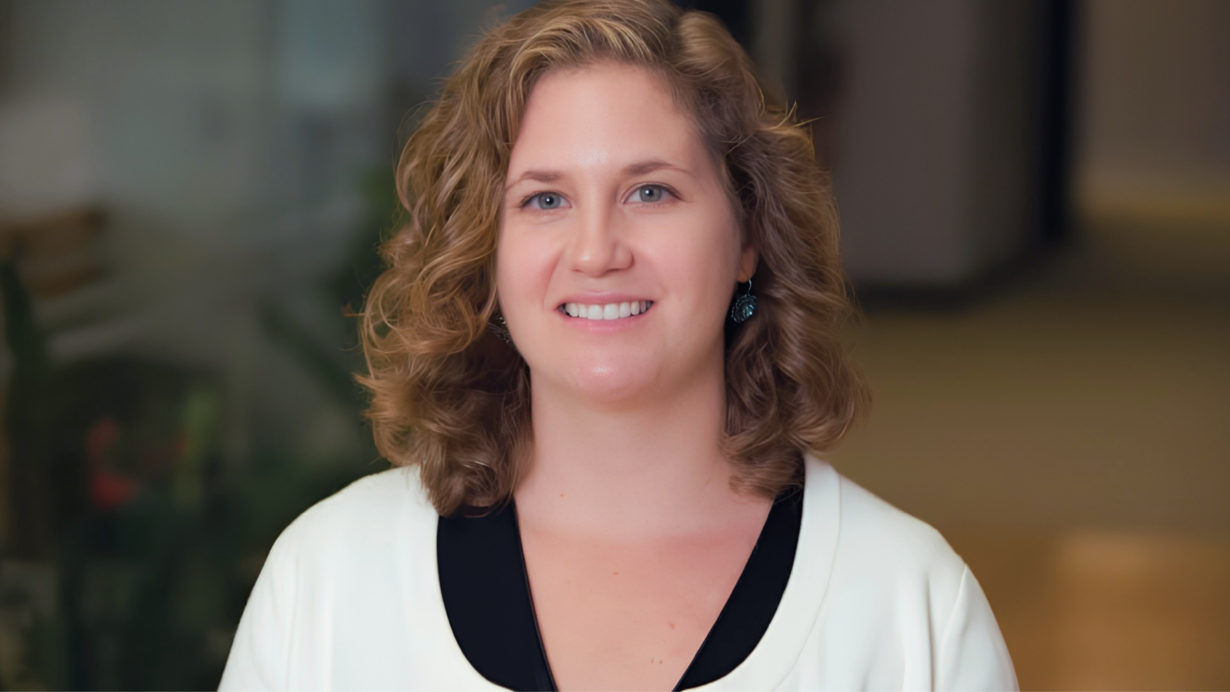
Professor Jennifer Nuzzo, director of the Pandemic Center at Brown University, on the Ebola emergency in the Congo, late detection, and why honest communication, not better tools, is the intervention most systems still neglect.
Jennifer Nuzzo has stopped waiting for the quiet. After Covid-19, many in her field hoped for a stretch of calm. Those hopes, she says, have been dashed over and over again. The proof is on her desk this month: a deadly Ebola outbreak spreading across the eastern Democratic Republic of the Congo, with no vaccine and no specific treatment, and a health system once again being asked to improvise.
Nuzzo directs the Pandemic Center at Brown University’s School of Public Health and co-led the Global Health Security Index, the most widely cited attempt to measure how ready countries actually are. Her assessment is unsentimental. “We are simply unprepared,” she says, “and there are critical gaps in our readiness.” She did not need this month’s outbreak to reach that conclusion. The return of measles told her everything she needed to know.
The disease that grades the system
Ask Nuzzo to name the most underestimated infectious threat and she does not reach for something exotic. She names measles. Not because it is novel, but because it is a proxy. Measles is among the most contagious diseases known, and controlling it exercises every part of a response at once: surveillance, vaccination, cold chains, trust, follow-up. A system that is working does not have measles outbreaks.
“Controlling measles exercises every single piece of the response. The fact that we have outbreaks tells me almost everything about how unready we are.”
The logic is uncomfortable because it removes the usual excuses. There is a safe, effective, decades-old vaccine. When outbreaks return anyway, the failure is not scientific. It is institutional: gaps in coverage, eroded trust, weakened routine systems. If a country cannot hold the line against a disease it already knows how to stop, she argues, it has little chance against something worse.
Communication is not the press release
This is where Nuzzo is most insistent. Public health, she argues, has long treated communication as something done in addition to the real work. She wants it reclassified. For diseases without vaccines or treatments, telling people what is happening and what to do is not a supplement to the intervention. It is the intervention.
“Communication is the most important public health intervention we have. More often than not, it is the intervention.”
Done well, it means stating uncertainty plainly: here is what we know, here is what we do not yet know, here is what we recommend, and here is what we are doing to close the gaps, with a promise to update the public the moment the picture changes. She has little patience for the instinct that silence is acceptable when no public action is being requested. People expect to be told what is happening even when nothing is being asked of them. In the absence of information, rumors and falsehoods fill the void.
The recurring error is the opposite of silence: premature reassurance. In the early days of Covid, and again more recently, some US authorities offered comfort the data could not support, hoping to tamp down worry. “That,” she says, “is a terrible mistake that we seem to keep repeating.” The discipline lies in matching the message to the facts, not in choosing between calm and candor.
Why the Congo outbreak is so hard
The Ebola outbreak now classed by the WHO as a public health emergency of international concern is, in Nuzzo’s assessment, a genuinely difficult one. It is caused by the Bundibugyo species, for which there are no approved vaccines, no specific treatments, and limited field-testing capacity. That absence forces responders to rely entirely on public health and social measures, in a setting where they are hardest to apply: an insecure region where the daily demands of earning money and finding food collide with instructions to stay home or isolate.
She is careful about scale. She does not expect a global pandemic, but she expects regional risk and possible cross-border spread, and she is unsettled by the response. There is no robust international coordination of the kind mounted during the 2014 West Africa epidemic. Neighboring countries are mostly trying to keep the virus out, an understandable instinct that misreads the problem. The threat ends only if the outbreak is contained where it is burning, and the DRC cannot control a multi-focal outbreak in such conditions alone.
The detail that alarms her most is the timeline. By the time the outbreak was recognized, it had probably been spreading for months, the latest such discovery in more than a decade. There is a technical explanation: the Bundibugyo species is not covered by the field tests routinely used to rule Ebola in or out. But a technical explanation, she insists, is not an excuse.
“That is exactly what a pandemic-start scenario is: a new or uncommon virus, in an insecure area, beginning to spread before anyone is looking.”
Detection, she stresses, is only the beginning of the work. A great deal of effort goes into finding outbreaks and far less into deciding what to do once they are found. Diseases concentrate in the populations with the fewest resources and the least security. Responding amid violence and instability is not a regrettable special case. It is the core of the job.
Where the optimism lives
For all the candor, Nuzzo is specific about where her hope lies. She is finishing an Africa Health Security Index, due in July, built with researchers across the continent, and she has been struck by the depth of talent assembling to confront these threats. “That is the place that’s going to lead,” she says. “That is where innovation is happening.”
Asked for the one investment worth protecting above all others, she does not hesitate: trust. The most ignored lesson of Covid, she says, is community engagement; the biggest early mistake governments make is overconfidence. The thread running through all of it is the same. Preparedness is not a binder of plans or a warehouse of tools. It is whether the tools get used, and whether, when the moment comes, people are told the truth.
This feature is adapted from a conversation on The Scholars Table with Dr. Banda Khalifa.