


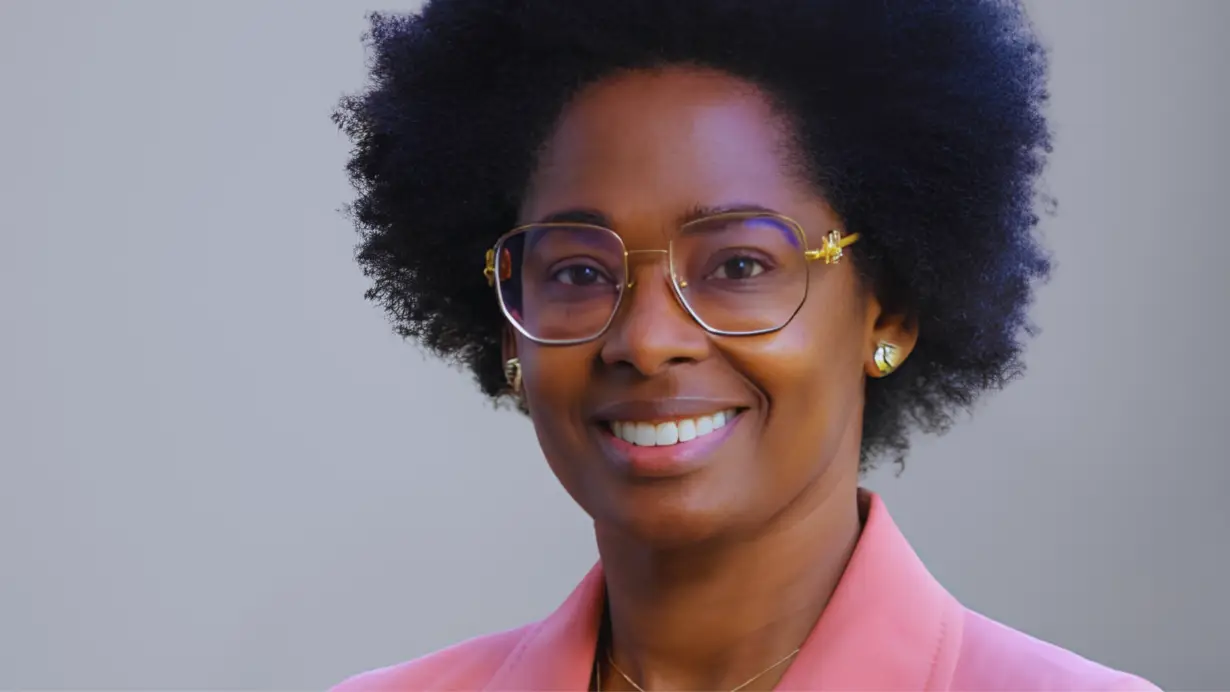
Dr. Marie Roseline Belizaire, Emergency Director at WHO Africa, on leading through crisis, the deepfake that nearly sparked a panic, and why the continent’s future depends on what it builds at home.
There is a moment Dr. Marie Roseline Belizaire returns to whenever she is asked what leadership really means. It is the 2018 to 2020 Ebola outbreak in the Democratic Republic of the Congo, in the conflict-torn Kivu region, where her team was responding to a lethal virus while under direct armed attack. Some of her colleagues were killed.
“That experience changed my perspective forever,” she says. “It taught me humility. Leadership is not about titles. It is about responsibility, presence, and making difficult decisions under pressure, while always keeping humanity at the center.”
It is a fitting entry point for a conversation with someone who has spent two decades at the sharp edge of global health. A physician trained in Cuba, shaped by early work in Haiti, and forged across emergencies from Mauritania to Angola to the DRC, Belizaire now leads emergency preparedness and response for the entire African Region. And her message is bracingly clear: the way Africa thinks about emergencies needs to change.
The work that happens before the headlines
The biggest misconception, she says, is that emergency work begins when disaster strikes. In reality, most of it happens long before. “A very large part of our work happens before the crisis is even detected, in preparedness, prevention, and surveillance systems.”
The second misconception is that emergencies are medical events. They aren’t. They are political, economic, social, environmental, and security crises at once. Floods arrive alongside displacement, which arrives alongside armed conflict and food insecurity. “In some places,” she notes, “response teams are operating in extremely insecure environments.”
Her mission, then, is a shift in posture, one that moves African nations “from a cycle of constant reaction toward a culture of preparedness, resilience, and anticipation.” Preparedness, she argues, is not a health issue alone. “It is a development issue, a security issue, an economic issue, and a dignity issue. A country that cannot protect its population during a crisis cannot achieve sustainable development.”
Three moves that would change everything
Asked for the highest-leverage fixes, she doesn’t hesitate. First, sustainable domestic financing for preparedness, so readiness no longer hinges on external funding. Second, strong, data-powered surveillance and early-warning systems, “because without data, you cannot make evidence-based decisions.” Third, protecting the health workforce, the frontline responders who are too often lost in the line of duty.
The delays that plague emergency response, she insists, rarely come from a lack of will. “They come from weak systems.” Fragmented coordination, slow financing, procurement bottlenecks, legal barriers to moving supplies across borders. During COVID-19, materials couldn’t pass from one country to the next. “Even when funds exist, the administrative process to release them is often too slow.”
And the single biggest threat over the next five to ten years? Not any one pathogen. “The biggest threat is complexity itself.” She lists climate change, urbanization, displacement, conflict, antimicrobial resistance, and misinformation, all converging and amplifying one another. Mosquitoes are adapting to a warming climate. Falsehoods travel faster than the diseases they describe.
Preparedness today cannot be hazard-specific. It must be multi-hazard.
The deepfake that almost worked
Nowhere is that new complexity clearer than in AI. WHO Africa has just rolled out PDX (the Preparedness Data Exchange), a generative-AI system that fuses hazard data and health-system intelligence to shorten the gap between alert and decision. Belizaire calls it the first of its kind.
But she is candid about the danger. She describes an AI-generated video that recently circulated online, splicing real footage of a health minister to falsely announce a Nipah virus outbreak in Uganda. “At first it was very difficult to tell whether it was real or fake. We had to contact the country’s authorities immediately to verify.” The lesson is stark: AI can manufacture panic as easily as it can prevent it. “Africa must not only consume AI. It must help shape it, including the governance and legal frameworks.” AI, she says, should support human judgment, never replace it.
Self-reliance as strategy
On the stalled 2025 Pandemic Agreement, she points to the unresolved fight over pathogen access and benefit-sharing, a debate rooted in the memory of COVID-era inequity. “No one is safe until everyone is safe.” And on the shift toward “America First” bilateral deals, with countries like Ghana declining to sign over data concerns, she sees a wake-up call rather than only a threat: “Health security cannot be externally financed indefinitely.” Funding shocks, she argues, could accelerate Africa’s move from dependency toward genuine self-reliance.
Her advice to the thousands of early-career professionals watching is disarmingly human. Say yes before you feel ready. Leave your comfort zone. Keep a mentor, a friend, and an advisor. Learn from people who disagree with you. And never forget the human side: “Technical expertise matters. But empathy and humility matter just as much.”
Her most underrated skill in all of global health? “Active listening.” Her closing hard truth? That the next generation must accept, early, the call to go where the work is. “It should be a call from inside.”
This feature is adapted from a conversation on The Scholars Table with Dr. Banda Khalifa.